Listed on CEA Digital Law Events Network
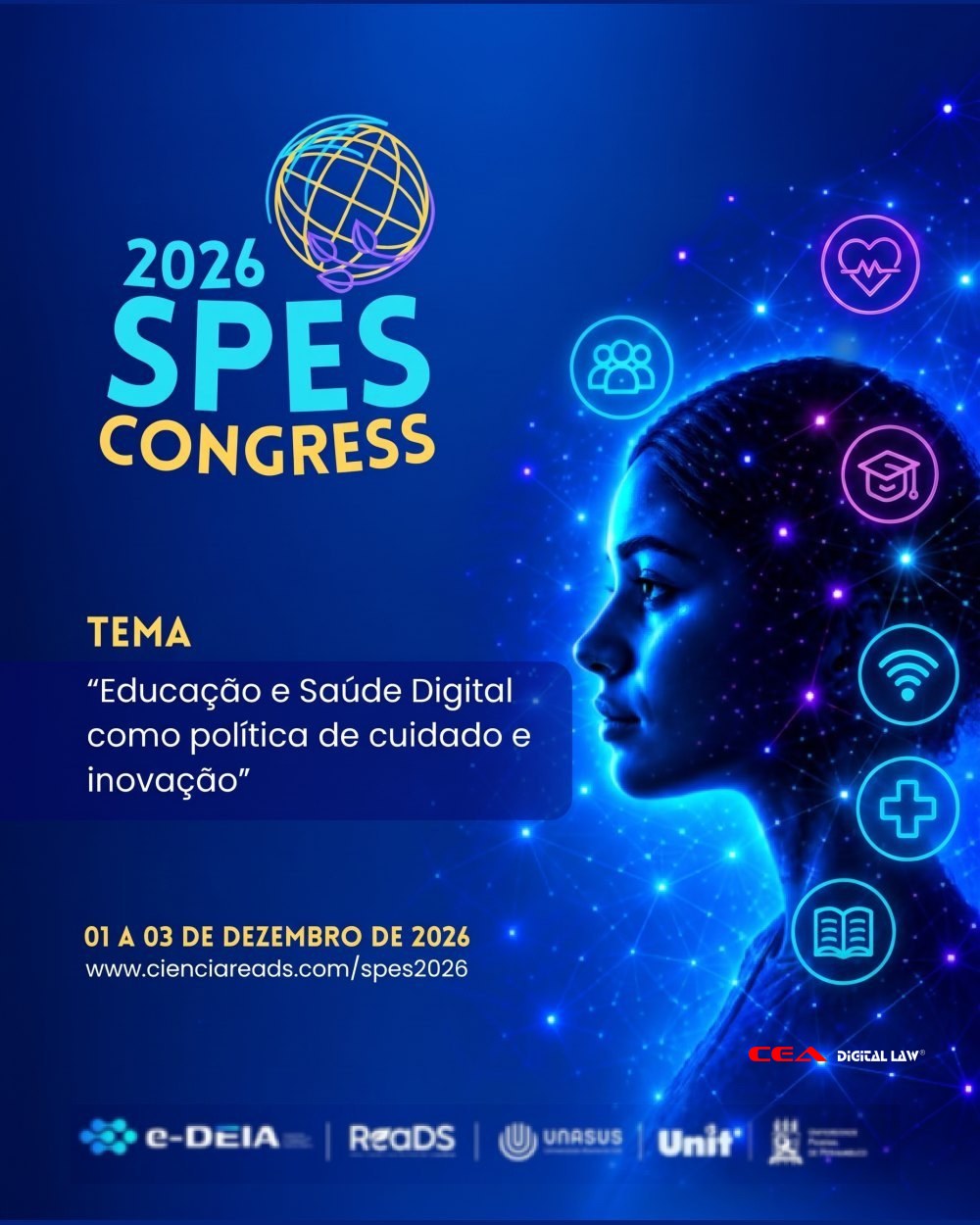
Digital Education and Health as a policy of care and innovation
The 2030 Agenda for Sustainable Development, adopted by the United Nations, establishes a global commitment to promoting well-being, equity, sustainability and the reduction of inequalities. Goals such as SDG 3 – Good Health and Well-being, SDG 4 – Quality Education, SDG 9 – Industry, Innovation and Infrastructure, SDG 10 – Reduced Inequalities and SDG 16 – Peace, Justice and Strong Institutions place science, education, technology and public policy at the center of strategies for the future.
In this context, international organisations such as UNESCO, the OECD and the World Economic Forum have reiterated the need to reimagine education and health systems in the face of ongoing digital, environmental and social transformations. UNESCO’s report Reimagining our futures together highlights education as a global common good, fundamental to strengthening democracy, cooperation and sustainable development in societies increasingly mediated by digital technologies.
Along the same lines, the OECD and the World Economic Forum point out that digital transformation, responsible artificial intelligence and the ethical use of data are key elements for the sustainability of public systems, provided they are guided by values such as equity, transparency, care and social justice. Thus, digital education and health cease to be mere technological instruments and become structuring policies of care for people, territories and the future.
In Brazil, this global alignment is embodied in policies such as the BNCC (National Common Curricular Base) in Computing, which recognises digital education as an essential part of basic education, promoting computational thinking, digital culture and critical citizenship. This foundation is strategic for meeting the 2030 Agenda, as it prepares students, education and health professionals, public managers and society to act in an ethical, innovative and evidence-informed manner.
The II SPES International Congress 2026 is explicitly framed within this commitment, constituting an academic, scientific and institutional product aligned with the 2030 Agenda and, by connecting open science, artificial intelligence, digital education and health, the congress contributes directly.
More than a space for debate, SPES 2026 is conceived as an instrument of inter-institutional cooperation that brings together academia, public education and health networks, managers and professionals, in order to build concrete pathways for implementing the goals of the 2030 Agenda. By positioning digital education and health as policies of care and innovation, the congress reaffirms its commitment to the common good, sustainability and the centrality of life in public decision-making.
Programme
https://www.cienciareads.com/programacao
Newsletter
Events, news and analysis on digital law, straight to your inbox. Only when we have something worth telling you.