
Drought is a climatic phenomenon characterised by a prolonged lack of rainfall, which results in water shortages. It has a significant impact on agricultural production, since water is a fundamental resource for crop growth.
Artificial intelligence (AI) can play an important role in mitigating the effects of drought on agricultural production. Here are some of the ways in which AI can help:
1. Water forecasting and management: AI can analyse large volumes of historical data on rainfall, reservoir levels and soil moisture, among other factors, to predict weather patterns and support water planning and management. This allows farmers to make informed decisions about when and how to irrigate their crops, making the best use of the water available.
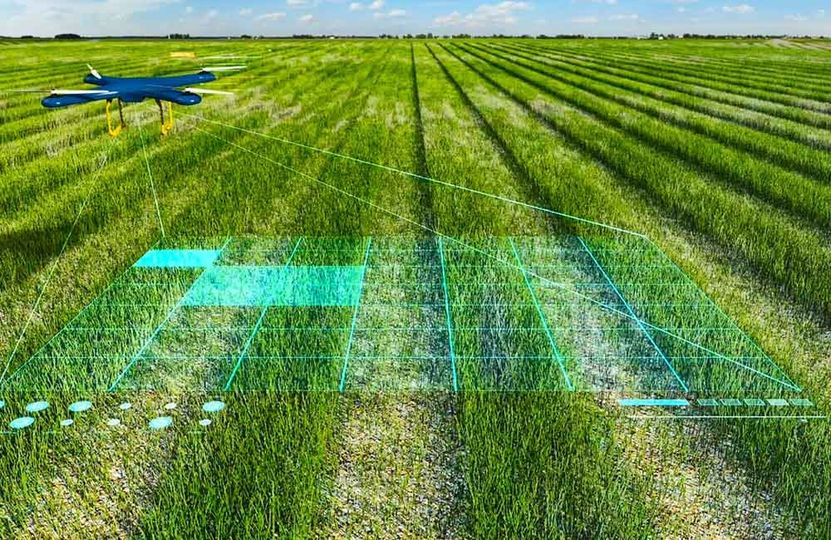
2. Precision agriculture: AI can help optimise the use of agricultural resources such as water and fertilisers by collecting and analysing data in real time. Sensors and connected devices can monitor variables such as soil moisture, temperature, water quality and crop growth. Using this data, AI algorithms can identify patterns and provide precise recommendations to improve water efficiency and reduce waste.
3. Selecting drought-resistant crops: Using machine learning techniques, AI can analyse large genetic databases to identify the genes or traits that make crops more resistant to drought. This can support the selection and improvement of crop varieties that are better adapted to drought conditions.
4. Pest and disease monitoring: Drought can weaken crops and make them more vulnerable to pests and diseases. AI can be used to analyse images and data collected by drones, satellites or other monitoring devices in order to detect pests and diseases early and prevent them from spreading, helping to minimise crop losses.
5. Modelling and simulation: AI models can simulate different climate scenarios and assess their impact on agricultural production. This can help farmers and decision-makers to plan and prepare for future droughts by developing mitigation and adaptation strategies.
In short, artificial intelligence can play an important role in drought management and agricultural production by providing tools and techniques to optimise water use, improve the selection of drought-resistant crops, and prevent and control pests and diseases. It should be stressed, however, that AI is not a complete solution in itself: it must be combined with comprehensive approaches involving farmers, scientists and decision-makers if the challenge of drought is to be properly addressed.
A number of software programs and tools are used in agricultural production and drought management. Some examples are set out below:
1. Geographic information systems (GIS): GIS programs such as ArcGIS and QGIS make it possible to collect, store, analyse and visualise spatial data. These tools are useful for analysing weather patterns, managing water, monitoring crops and planning agricultural activity.
2. Precision agriculture platforms: Various platforms and software packages specialise in precision agriculture, such as Trimble Ag Software, Climate FieldView and Agworld. These tools integrate data gathered from different sources (sensors, drones, satellites) and use AI algorithms to generate precise recommendations on irrigation, fertilisation and crop management.
3. Simulation models: Packages such as DSSAT (Decision Support System for Agrotechnology Transfer) and APSIM (Agricultural Production Systems Simulator) are agricultural simulation models that help to predict crop yields and assess the impact of climatic factors, such as drought, on production.
4. Agricultural monitoring platforms: Various cloud-based platforms allow agricultural variables such as soil moisture, temperature and water quality to be monitored remotely. Options include CropX, Teralytic and Arable.
5. Data analysis tools: Software such as R and Python, together with libraries such as Pandas and NumPy, is widely used to analyse agricultural data and implement artificial intelligence algorithms. These tools make it possible to process large volumes of data and to develop predictive and machine learning models.
It is worth stressing that the choice of software will depend on the specific needs of each agricultural project and on the budget available. It is also advisable to seek specialist advice in order to select the right tools and ensure that they are properly implemented.
Newsletter
Events, news and analysis on digital law, straight to your inbox. Only when we have something worth telling you.