
Antonio Tejeda Encinas | President of the Euro-American Committee of Digital Law - CEA Digital Law | CEO of META Channel Corporation | Geo-technopolitical analyst
The digital euro: the European contradiction that no one is watching
At META Channel – a strategic corporation specialising in technology law, digital regulation and the development of corporate infrastructure – we analyse the impact of the digital euro from the standpoint of European governance and the institutional stability of the digital ecosystem.
Europe has been immersed in the debate on the digital euro for years. The official narrative presents it as a natural and inevitable evolution: a response to the digitalisation of payments, a tool for monetary sovereignty against private stablecoins and a defensive move in the geoeconomic competition with China.
This approach, focused on technical efficiency and financial competition, is accurate in what it describes, but dangerously incomplete.
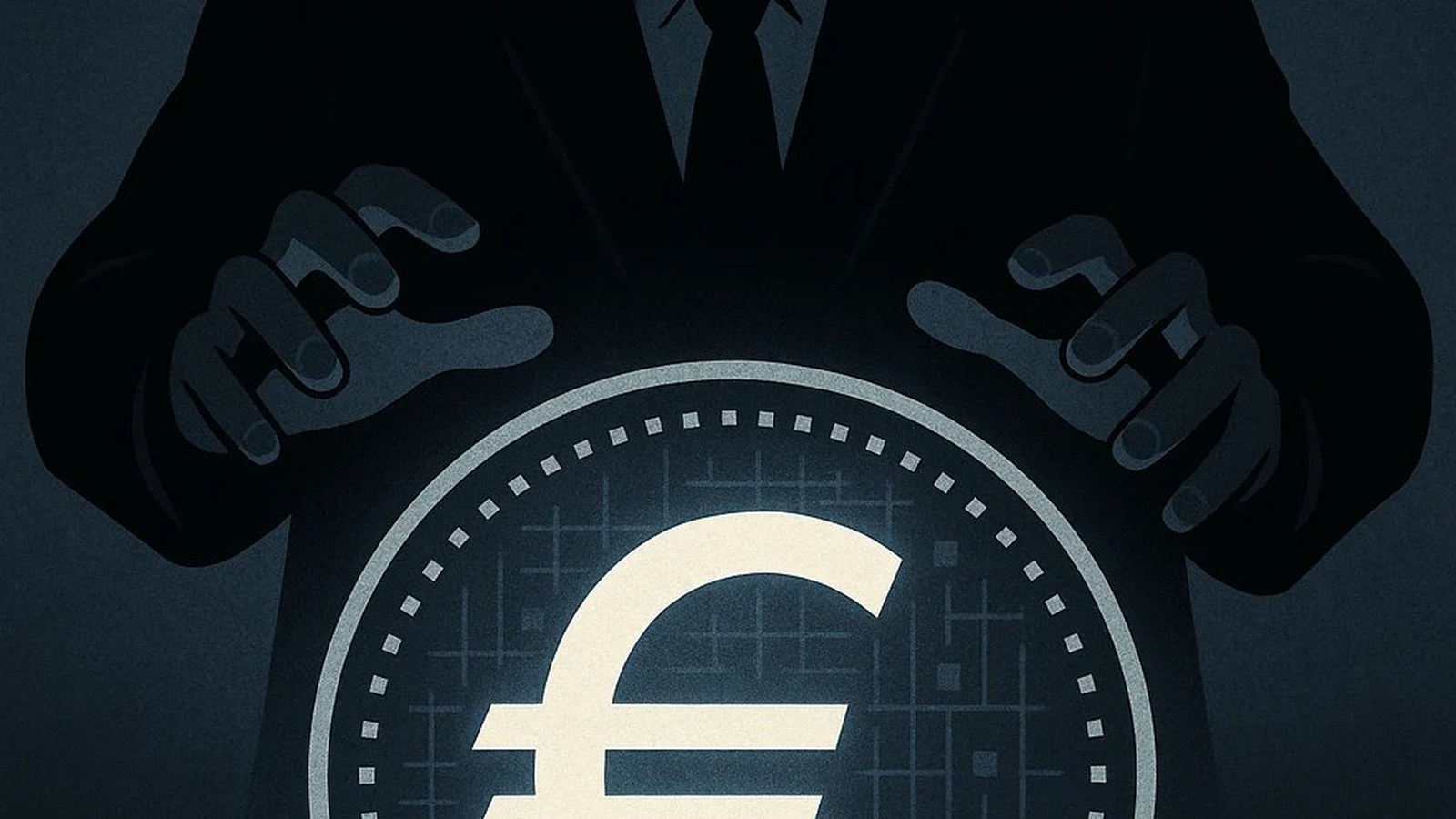
Because the digital euro is not, and never will be, just a payment system. It is an infrastructure of power.
And this is where the European debate reveals a contradiction so profound that it is alarming. We are building the most centralised infrastructure of power in our recent history, and we seem to have forgotten everything we have learned about limiting power in the digital age.
I. Money is not just a payment: it is a map of life
The fundamental mistake is treating the digital euro as a 2.0 version of a bank transfer or a credit card. It is not. A Central Bank Digital Currency (CBDC) is fundamentally a traceability architecture.
Money, in its raw form, says more about us than any social network. It reveals our priorities (what we spend on), our affinities (who we donate to), our weaknesses (what medications we buy), and our networks (who we associate with).
The ECB and regulators assure us that privacy will be “equivalent to cash” at certain levels. But this is a technical promise that ignores political reality. Technology does not forget. An architecture designed for traceability, however anonymised its surface layers may be, can always be re-identified under the right conditions.
I’m not talking about malicious surveillance today. I’m talking about a design that creates the perpetual possibility of that surveillance tomorrow.
And this is where clear explanation is essential. Let us consider what this means in practice:
- Commercially: What happens if an insurer could, in future, infer patterns of risky behaviour (micropayments at cigarette machines, purchases of certain foods) and adjust its premiums?
- Socially: What happens if a credit-risk algorithm penalises people who donate to causes deemed “unstable” or who have “irregular” spending patterns?
- Politically: What if a government could track precisely who funds a trade union, an independent media outlet or an “uncomfortable” environmental organisation?
The risk is not that an ECB official is going to spy on our supermarket shopping. The risk is the creation of a centralised, immutable database of human behaviour that can be used to profile, influence and control on a scale that no institution, public or private, has ever had.
II. The great contradiction: we regulate Google, but not ourselves
This is where the argument reaches its critical point. Europe has rightly positioned itself as the world leader in regulating digital power.
Over the past decade we have diagnosed with precision how the large technology platforms (Big Tech) used their infrastructure power to distort markets, erode privacy and weaken democratic pluralism.
And in response, we have built the most sophisticated regulatory arsenal on the planet:
- The Digital Services Act (DSA), to rein in power over content and give users rights.
- The Digital Markets Act (DMA), to dismantle the monopoly power of gatekeepers.
- The European The European Media Freedom Act (EMFA), to protect pluralism from economic and political interference.
Europe understands perfectly well that whoever controls the digital infrastructure (the search engine, the app store, the social network) holds disproportionate power.
And yet, in a staggering paradox, as we are about to deploy the most critical digital infrastructure of all – our own currency – we appear to be completely ignoring the principles of the DSA, DMA and EMFA.
We are designing the digital euro as a purely monetary project, siloed within the ECB, when by its very nature it is the ultimate gatekeeper.
III. The proposal: a digital euro under the (digital) rule of law
If Europe takes its own democratic principles seriously, the digital euro cannot be a regulatory state of exception. It must be the first major public infrastructure designed, from day one, under the safeguards we have already created.
My proposal is that the design of the digital euro must be explicitly subject to the principles of these three laws.
1. The digital euro as a “market” (DMA principles)
The DMA was created to prevent a gatekeeper (such as Apple or Google) from imposing its own terms, fees and payment systems on its platform.
The digital euro is, by definition, a monetary gatekeeper. The risk is that the ECB or the designated intermediaries create a closed ecosystem.
- Applying the DMA means: Guaranteeing interoperability by law. Ensuring that any wallet developer, bank or fintech can connect to the digital euro on fair, transparent and non-discriminatory terms. It means that the ECB cannot use its position to create a monopoly on access to public money.
2. The digital euro as a “service” (DSA principles)
The DSA was created to give fundamental rights to users against the power of platforms. It mandates algorithmic transparency and, crucially, gives the right to appeal when an account is suspended or content is removed.
What is worse than having a post taken down? Having your money frozen.
- Applying the DSA means: If a payment is blocked, if a transfer is flagged by a “risk” algorithm, or if an account is frozen (perhaps by mistake, or by an opaque administrative order), citizens must have the same rights of transparency and appeal as they have on a social network. Their rights over their money cannot be weaker than their rights over their selfies.
3. The digital euro as “influence” (EMFA principles)
The EMFA seeks to protect pluralism by preventing economic or state interference in the media. Its spirit is to protect democratic debate from the pressure of money.
The digital euro, if it allows full traceability, is the perfect tool for economic pressure. It makes it possible to see who is funding what.
- Applying the EMFA means: The design of the digital euro must prioritise the protection of privacy in sensitive transactions, such as donations to media outlets, NGOs or political causes. It must be technically impossible for the State (or any other actor) to use the payment system to create “maps of influence” or to exert a “chilling effect” on support for civil society.
IV. The inevitable counterargument: security vs freedom (and why it is a false dichotomy)
The ECB and financial regulators have a legitimate counterargument, and it would be dishonest not to address it directly.
They will say: “Traceability is not a bureaucratic whim. It is a legal obligation arising from anti-money laundering (AML) and counter-terrorist financing (CFT) rules. Without traceability, the digital euro would become the perfect haven for organised crime.”
It is a valid argument. And the answer is not to deny it, but to dismantle it as a false dichotomy.
Because the correct question is not “traceability yes or no?”, but “who has access to that traceability, under what conditions, and with what judicial safeguards?”
The difference between a crime prevention system and a mass surveillance system lies not in whether a record exists, but in:
- Proportionality: Is everything recorded, or only what is suspicious? Do reasonable thresholds apply (as they already do for cash)?
- Judicial authorisation: Can the data be accessed without a prior court order? Or is there a legal firewall between the payment system and the authorities?
- Transparency: Do we know how many times the system has been used in investigations? Are there annual public reports, as there are for phone tapping?
- Reversibility: Is the data deleted after a statutory period? Or is it stored indefinitely “just in case”?
This is where the DSA, the DMA and the EMFA prove to be not incompatible with AML/CFT, but complementary to it.
- The DSA does not prevent a platform from removing illegal content. What it requires is that it does so with transparency, proportionality and a right of appeal. Applied to the digital euro: the point is not to prevent a transaction suspected of financing terrorism from being blocked. The point is that citizens have the right to know why it was blocked and to challenge it if it was a mistake.
- The DMA does not stop Apple from having an app store. What it prohibits is Apple abusing its dominant position to discriminate against competitors. Applied to the digital euro: the point is not to prevent the ECB from designing the system. The point is that it must not use its position to create a closed ecosystem that stifles innovation.
- The EMFA does not prevent the State from regulating the media. What it prohibits is the State using its economic or regulatory power to exert editorial pressure. Applied to the digital euro: the point is not to prevent the fight against crime. The point is that the design of the system must not, in practice, make it possible to map who funds which cause, creating a chilling effect on civil society.
The key is design from the beginning.
A digital euro designed with “privacy by default” and traceability only “by court order” is technically possible. Cryptographic protocols already exist (such as zero-knowledge proofs or differential privacy architectures) that make it possible to verify that a transaction meets certain criteria (e.g. “it is below 10,000 euros”) without revealing the details of the transaction itself.
The problem is not technical. It is one of incentives. Because a system with full traceability is easier to build, cheaper to operate and more reassuring for bureaucrats.
And this is where Europe must decide whether its commitment to digital rights is rhetoric or architecture.
Conclusion: the decision is not technical, it is political
The debate over the digital euro is not whether the technology is secure or whether settlement is instantaneous. Those are technical problems that will be resolved.
The real question is whether we are building a tool of efficiency or an infrastructure of freedom. The ECB and the European institutions are, through inertia, focused on the former, because that is what they know how to do.
Our job is to force the debate towards the latter.
Europe has the legal tools and institutional maturity to get it right. We have created a robust digital rights framework precisely for this moment. Ignoring it now, in the most important infrastructure project of the century, would not be an oversight. It would be an abdication.
Newsletter
Events, news and analysis on digital law, straight to your inbox. Only when we have something worth telling you.


