By Antonio Tejeda Encinas, President of PCDD-Participación Ciudadana. Democracia. Derechos Digitales
A drama that does not make the headlines
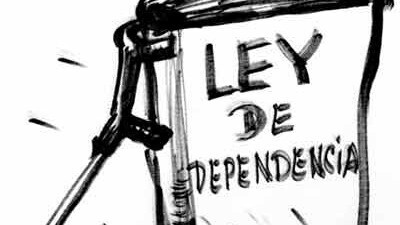
The dependency crisis in the Canary Islands is an alarming reality which, however, does not receive the space it deserves in the media. Thousands of people in situations of extreme vulnerability find themselves trapped in a bureaucratic system that condemns them to oblivion and, in many cases, to death before they receive the help they need.
The dependency crisis in the Canary Islands is not just an administrative problem, but a reflection of a system in which bureaucracy, indifference and inequality intertwine to perpetuate the abandonment of the most vulnerable. Through cinema, films such as Network, Dr. Strangelove and The Platform allow us to understand – from different angles – how structural failures can condemn thousands of people to invisibility, despair and, in many cases, death before they receive help.
‘Network’ and the media invisibility of dependency
In Network, we see how the media decide what is relevant and what is not. The dependency crisis in the Canary Islands suffers from this phenomenon: it does not interest audiences and, therefore, generates no real political pressure. There are no mass protests and no extensive media coverage.
Yet the figures are alarming:
- The Canary Islands are the autonomous community with the second-longest delay in resolving dependency applications, with an average wait of 12.5 months in 2022, according to the Sistema para la Autonomía y Atención a la Dependencia (SAAD). Projections for 2025 suggest that this wait will exceed 14 months, in breach of the legal time limit of 6 months.
- In 2022, more than 6,500 people died on the waiting list across Spain, according to the Asociación de Directoras y Gerentes de Servicios Sociales. By extrapolation, around 260 people would have died in the Canary Islands that year before receiving help.
- In 2023, 28,500 people were waiting for a benefit in the Canary Islands, according to the Consejería de Derechos Sociales de Canarias. In 2024, the figure was around 30,000, according to complaints by the Confederación Española de Organizaciones de Mayores (CEOMA).
In Network, the protagonist becomes a media phenomenon by voicing his despair live on air. In reality, dependent people in the Canary Islands have no such space to express their situation. They simply disappear without making a sound.
‘Dr. Strangelove’ and the bureaucracy that kills
Dr. Strangelove shows how incompetence and administrative errors can lead to destruction. The Ley de Dependencia in the Canary Islands operates under a similar logic. Although the system is designed to help the most vulnerable, in practice it has become a mechanism that delays and, in many cases, denies the necessary assistance.
The reasons include:
- 40% of applicants abandon the process because of its complexity, according to the Defensor del Pueblo in 2023.
- The Auditoría de Canarias confirmed in 2022 that the regional departments of Health and Social Welfare do not share data, which delays diagnoses and assistance.
- The central Government allocated 96 million euros to the Canary Islands for dependency in 2024, but associations such as CEOMA are calling for 138 million to cover basic needs, which points to a funding gap of more than 30%.
In Dr. Strangelove, nuclear war is unleashed by a system designed to be ‘efficient’ that turns out to be inoperative. In the Canary Islands, dependency is managed with a similar bureaucratic coldness: the paperwork matters more than the person.
‘The Platform’ and the hierarchy of despair
The Platform presents a hierarchical system in which those at the top benefit while those at the bottom struggle to survive. This parallel is evident in the management of dependency in the Canary Islands:
- A private care home costs 1,800 euros a month, according to the Plataforma de Mayores y Pensionistas in 2023, out of reach for pensioners whose average income is 1,100 euros, according to the INE.
- 41% of dependent people in the Canary Islands live in households with incomes below 1,000 euros a month, according to Cáritas in 2023. For them, public assistance is not a right, but a wait against death.
- Energy poverty affects 34% of households with dependent people, according to the Informe Foessa in 2024. Many have to choose between buying medicines and paying the electricity bill.
In The Platform, those at the top serve themselves first and leave those below to fend for themselves as best they can. In real life, there is no ‘administrator’ regulating the flow of resources, nor any revolution to change the structure. There is only waiting, despair and abandonment.
How much longer will we put up with this disgrace?
The three films analysed are not merely metaphors for the problem, but diagnoses of a society that functions on defective foundations:
- If the media do not treat it as important, the problem does not exist. The dependency crisis in the Canary Islands barely makes the headlines in the major national media. Without media pressure, there is no political pressure.
- If bureaucracy controls everything, the solution never comes. Dependent people and their families have to contend not only with illness or disability, but with an administrative labyrinth that wears them out and leaves them with no alternatives.
- If society is structured in levels of privilege, the weakest always lose. Those who can pay for a private care home survive. Those who depend on the public system wait until it is too late.
And worst of all: we know this is how things are, yet we go on tolerating it.
In Network, Howard Beale becomes a media phenomenon by screaming his despair on television: ‘I’m as mad as hell, and I’m not going to take this anymore!’.
If nothing changes, CEOMA’s projections warn that 20,000 people could die on the waiting list in the Canary Islands before 2030. The question is clear:
Will we go on waiting, or will someone shout for dependent people before it is too late?
Newsletter
Events, news and analysis on digital law, straight to your inbox. Only when we have something worth telling you.