When machines talk without us: human exclusion, the governance of the invisible and Europe’s regulatory challenge
By Antonio Tejeda Encinas, President of the Euro-American Committee of Digital Law - CEA Digital Law, Meta Channel Corp.
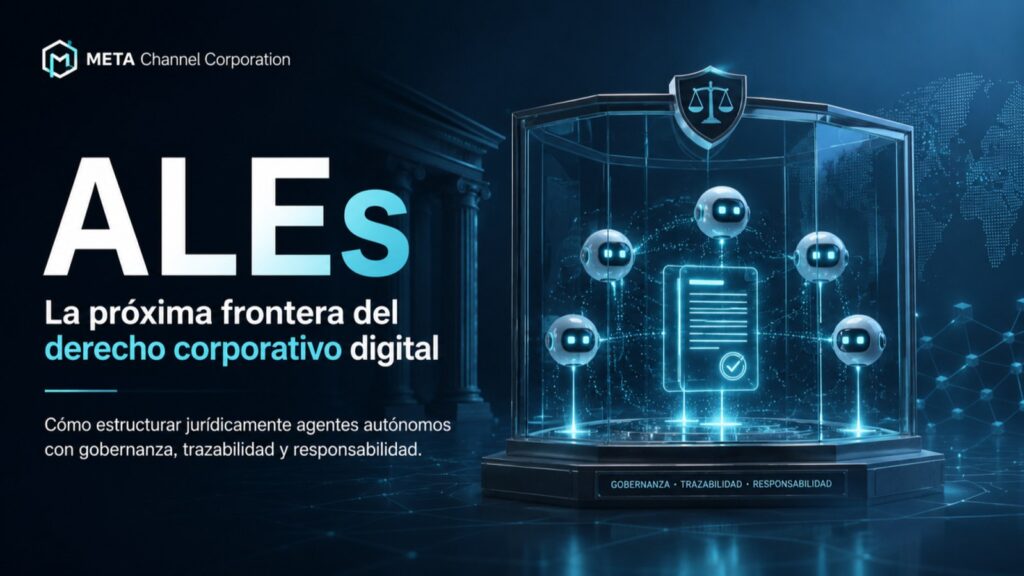
In sectors such as automated logistics, high-frequency trading and digital platform interoperability, machines already talk to one another with no human in between. They exchange data, weigh up options, optimise processes and execute decisions with immediate legal and economic consequences. What until recently seemed the stuff of science fiction is now a central part of the world’s technical infrastructure. And yet, in many of its critical aspects, the law has barely begun to address it.
At the Euro-American Committee of Digital Law - CEA Digital Law, we see this kind of autonomous interaction between artificial intelligence systems as a structural shift in the very principle of liability. The recently adopted EU Artificial Intelligence Act (Regulation (EU) 2024/1689) lays down a pioneering framework for classifying, supervising and restricting the use of AI systems according to their level of risk. The AI Act does not, however, settle — nor does it fully set out to settle — the question of effective traceability when decisions are made between interconnected systems with no direct human involvement.
What is more, the recent withdrawal of the proposed AI Liability Directive has left a worrying gap. Strict liability, the principle of attribution and compensation mechanisms all remain rooted in models designed for human beings or conventional corporate entities, not for autonomous flows of algorithmic decision-making. The law therefore faces a choice: either it evolves to understand and control these invisible interactions, or it is reduced to punishing the consequences without being able to anticipate them.
This gap has tangible effects, which Meta Channel Corporation, in its work representing Latin American and global companies in Europe, sees ever more clearly. In many cases, the decisions affecting its clients — goods held up, contractual clauses triggered automatically, exclusion from platforms — stem from autonomous interactions between AI systems in different jurisdictions, with no transparency, no explanation and no effective means of redress. Human-run businesses are left trapped in an automated architecture that decides on their behalf, with no accessible human authority to answer for it.
That is why we at CEA Digital Law propose moving towards a new legal category — the governance of autonomous interactions — combining:
- Cross-system traceability obligations.
- Mandatory legal audits of autonomous decision-making flows.
- A presumption of shared liability among the providers, developers and users of connected autonomous systems.
At Meta Channel Corporation, for our part, we propose a preventive strategy based on adapting contracts, documenting digital flows and monitoring automated interactions externally, so that companies can identify legal risks before they materialise.
We are facing a new paradigm: the conversation is no longer between humans, nor even between humans and machines, but between machines themselves. And if the law does not adapt to this invisible language, we will lose the ability to govern the systems that govern the world.
Newsletter
Events, news and analysis on digital law, straight to your inbox. Only when we have something worth telling you.