
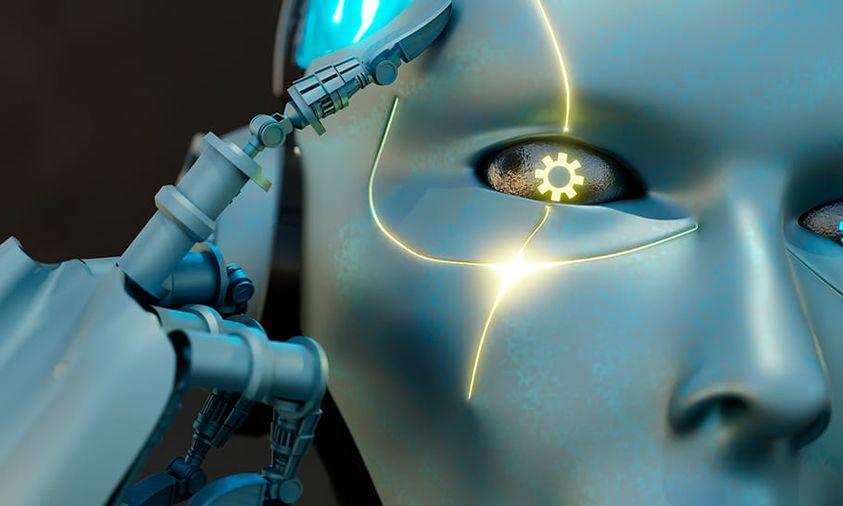
Empathy and emotional intelligence are related concepts, but they are not quite the same thing. Empathy is the ability to understand and SHARE the emotions of others, whereas emotional intelligence is the ability to recognise, understand and MANAGE both our own emotions and those of others.
In the context of AI, emotional intelligence refers to the ability of AI to recognise and understand human emotions and to respond to them appropriately. This may involve using natural language processing techniques and analysing tone of voice and facial expressions in order to understand users’ emotions and respond accordingly.
Empathy in AI refers to its ability to understand and share users’ emotions and to respond to them with empathy and in an appropriate way. This may call for a deeper level of understanding of, and sensitivity to, human emotions, and may involve more advanced natural language processing and emotion analysis techniques.
Emotional intelligence and empathy are therefore related but distinct concepts in the context of AI. Both are important if AI is to interact and engage with humans more effectively and satisfactorily.
Today we turn to empathy and ethics in AI
Artificial intelligence (AI) is an increasingly advanced technology that has improved people’s lives in many ways. As AI grows more sophisticated and becomes part of our daily lives, the question arises whether it can develop empathy and ethics.
As for empathy, some AI systems have been shown to simulate it, for example by using facial and voice recognition to identify human emotions and respond appropriately. However, this simulated empathy is limited and is not the same as real empathy, which involves genuinely understanding and feeling the emotions of others.
As for ethics, AI is a fast-growing field in which significant progress is being made towards systems capable of making ethical decisions in complex situations. Some researchers, for example, have created AI systems that can make ethical decisions in emergencies, such as a car accident in which difficult choices have to be made in an instant.
However, although AI can be programmed to follow certain ethical principles, it is unable to understand the cultural and social context in which ethical decisions are made. Moreover, ethics is a field that is constantly evolving and changing, and AI systems cannot adapt to those changes on their own.
For all these reasons, although AI can SIMULATE empathy and be programmed to make ethical decisions, it cannot develop empathy or ethics in the way human beings do, since humans are able to understand emotions and the social and cultural context in which ethical decisions are made. It is important to bear in mind that AI is no substitute for human empathy and ethics; rather, it is a TOOL that can help us improve our understanding and our decision-making.
Even so, there are clear benefits when AI operates according to ethical principles:
– Trust:
When AI systems make ethical and fair decisions, they build trust among users and in society at large. This is especially important in critical areas such as healthcare, public safety and financial decision-making.
– Less bias: AI can be trained to avoid human bias and prejudice in decision-making, which can make outcomes fairer and more just in many areas.
– Better quality of life: When AI systems operate according to ethical principles, they can help solve social problems and improve people’s quality of life. For example, AI can be used to identify and prevent child abuse, to improve access to healthcare in remote areas or to predict and prevent crime.
– Sustainability: AI can be used to promote ethical and sustainable business and consumer practices. For example, it can help to reduce food waste or to promote responsible, environmentally friendly production.
– Transparency: Ethical AI systems can provide clear and transparent information about how decisions are made, which can increase users’ trust and understanding.
In short, AI can be a powerful tool for improving society when it is deployed according to ethical principles. In this way we can reduce bias, improve quality of life, promote sustainability, build trust and enhance transparency. We must recognise, however, that AI cannot replace human empathy and ethics, and that ethical decision-making remains an ever-evolving field that requires the involvement and commitment of society as a whole.
Turning to
empathy, this is a complex human capacity that involves understanding the emotions of others and responding to them appropriately. Although AI cannot fully replicate it, there are several ways in which AI can be designed to be more empathetic and to improve its interaction with users and with society at large:
– Emotion recognition: AI can be trained to recognise users’ emotions through natural language processing techniques and the analysis of tone of voice and facial expressions. This can allow it to tailor its response more appropriately and with greater empathy.
– Personalisation: AI can be designed to adapt to users’ needs and preferences, which can make them feel better understood and looked after.
– Natural interaction: AI can be designed to interact in a more natural, human way, which can help create a sense of connection and empathy with users.
– Understanding context: AI can be designed to understand the context in which an interaction takes place, enabling it to respond more appropriately and empathetically.
– Empathetic responses: AI can be designed to give empathetic responses, recognising users’ emotions and needs and responding to them appropriately and with empathy.
It is important to bear in mind that AI empathy cannot replace human empathy; it is a TOOL that can help to improve interaction and the user experience. Furthermore, empathy must NOT be the only ethical consideration in AI design. AI should be designed to make ethical and fair decisions in all its interactions and applications.
At Meta Channel Corp. we offer a range of AI software and tools that can be used to develop systems with empathy and/or emotional intelligence capabilities. These include:
1. TensorFlow: an open-source library developed by Google for building machine learning systems. It can be used to train neural networks that recognise and respond to human emotions.
2. OpenCV: an open-source computer vision library that can be used to analyse images and video to detect human emotions through facial recognition.
3. IBM Watson Tone Analyzer: a tone analysis tool that can be used to analyse natural language and detect emotions in human speech.
4. Affectiva: a real-time emotion analysis platform that uses facial recognition to detect human emotions.
5. Amazon Comprehend: a natural language processing service that can be used to analyse human language and detect emotions and sentiment.
6. Microsoft Azure Cognitive Services: a suite of AI tools that includes facial recognition, emotion analysis and natural language processing capabilities.
These are just a few examples of the AI tools and software that can be used to develop systems with empathy and emotional intelligence capabilities. The right choice of software will depend on the specific requirements of the project and on the skills and expertise of the developers.
Newsletter
Events, news and analysis on digital law, straight to your inbox. Only when we have something worth telling you.