By Antonio Tejeda Encinas, President of the Euro-American Committee of Digital Law - CEA Digital Law and PCDD-Participación Ciudadana, Democracia y Derecho.
Introduction: the productivity dilemma in the digital society
Since the Industrial Revolution, productivity has been the engine of economic development. As of February 2025, automation and artificial intelligence have rewritten the equation: efficiency is no longer limited by human effort, but by each company’s technological capacity.
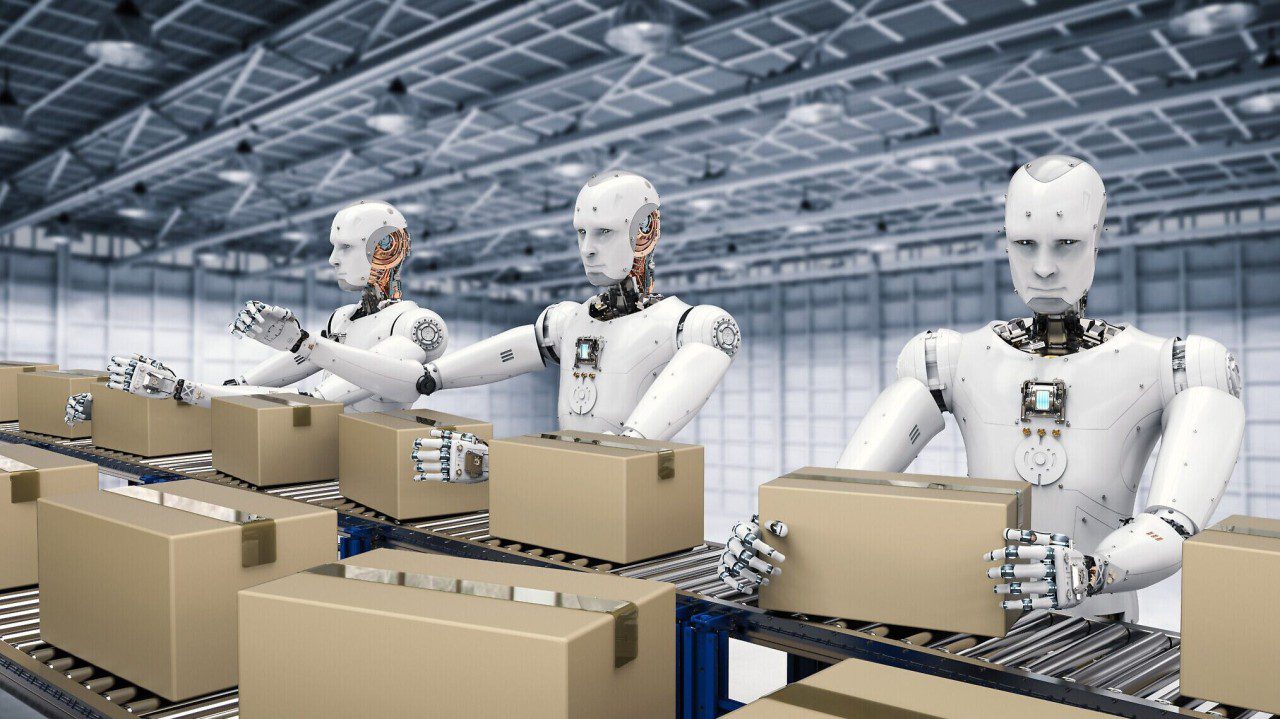
The promise of limitless productivity has led entire sectors to replace workers with robots. Logistics, manufacturing and service companies have automated tasks at unprecedented speed. Yet behind this progress lie some fundamental questions:
- Who controls this transformation?
- How can we prevent automation from becoming a driver of inequality?
- What role should the State, the law and civil society play in ensuring a fair transition?
Against this backdrop, two key players have emerged with complementary perspectives:
- The Euro-American Committee of Digital Law - CEA Digital Law examines how legislation must adapt to strike a balance between technological progress and the protection of labour and economic rights.
- PCDD, the Association for Citizen Participation in Defence of Fundamental Rights, Democracy and Digital Rights, warns of the social risks of unchecked automation and of the need to ensure that digital transformation does not infringe fundamental rights.
The debate is not merely technical or economic. It is a question of democracy, fairness and digital governance.
Robotic productivity: an economic engine or a challenge for society
From a business perspective, automation is the perfect solution for boosting efficiency:
- Speed and precision. Robots do not get tired or make mistakes through fatigue.
- Lower costs. With no wages, social security contributions or breaks, profitability grows exponentially.
- Standardised processes. Quality stays constant, free from human variability.
However, this model based on mechanical efficiency comes at a very high social cost. Eliminating jobs does not just displace thousands of people; it changes the very structure of the economy.
PCDD has warned of the risk of a society polarised between those who control technology and those left displaced, with neither jobs nor economic alternatives. Without corrective measures, automation could become a mechanism of social exclusion.
From the perspective of CEA Digital Law, the problem is legal and structural:
✔ The lack of regulation allows large corporations to concentrate productivity, leaving small and medium-sized enterprises at a disadvantage.
✔ There are no clear laws on the taxation of automation: a company can replace thousands of employees without taking on any social responsibility.
✔ The European Union is debating rules on the impact of AI on employment, but regulation is still insufficient.
If technology is redefining productivity, digital law and citizen participation must determine who will benefit from this change.
Spain and the technology gap: an economic model at risk
Spain faces structural inequality in the adoption of automation. While large multinationals are accelerating their digitalisation, SMEs lack the resources to compete on productivity.
Key figures as of February 2025
- The SME Digitalisation Plan 2021–2025 has allocated €4,656 million to business modernisation, but fewer than 50% of SMEs have managed to make significant progress.
- While large companies have increased their investment in automation by 20% a year, SMEs have grown by only 3% in digitalisation.
- SMEs generate 62% of Spain’s gross value added, yet their lack of access to automation leaves them in a vulnerable position.
PCDD condemns the fact that the failure to democratise technology is producing an economic model in which only large corporations can benefit from digital productivity.
For its part, CEA Digital Law raises a crucial question: should access to automation be regulated to prevent productivity monopolies from forming?
✔ If only large companies can automate, the concentration of economic power will be inevitable.
✔ Labour law and taxation must be updated to reflect an economy in which machines generate wealth but humans still depend on traditional sources of income.
This is not just a market problem. It is a question of regulation and social balance.
Regulation and alternatives: how can we avoid a crisis of productivity without jobs?
CEA Digital Law and PCDD agree that technological progress cannot be left solely in the hands of the private sector. What is needed are public policies that regulate automation without holding back innovation.
Proposals from the perspectives of regulation and citizen participation
🔹 Taxes on automation. Companies that replace humans with robots should contribute to a social compensation fund. (CEA Digital Law)
🔹 Employment protection in the face of AI. Require companies to train their staff rather than dismiss them. (CEA Digital Law)
🔹 Redistribution of the wealth generated by automation. Models such as universal basic income should be part of the public debate. (PCDD)
🔹 Access to digitalisation for SMEs. Accessible financing and digital training schemes must be created for all businesses. (PCDD)
Automation is not the problem. The problem is who controls its implementation and how its benefits are shared.
Conclusion: productivity with balance, not exclusion
The age of automation is not a futuristic scenario but a present reality. The question is not whether machines will replace humans, but how we structure the economy so that this transformation does not lead to extreme inequality.
For PCDD, the central concern is that unregulated automation could break the social contract, dividing society into those who control technology and those consigned to unemployment.
For CEA Digital Law, the focus is on the urgent need to update regulation so that the productivity of the future is not the privilege of large corporations but an engine of fair development.
The challenge is not technical. It is economic, legal and social. We need a robust legal framework and active citizen participation so that automation becomes a tool for progress, not a mechanism of exclusion.
The productivity of the future must be a democratic, regulated choice, not something imposed by the market.
PCDD and CEA Digital Law: a necessary debate
✔ PCDD demands that digital transformation respect fundamental rights and guarantee a fair model of production
✔ CEA Digital Law calls for regulation that prevents the concentration of technological power and ensures a fair distribution of digital wealth.
Both organisations agree that the debate cannot wait. Automation is advancing, but the legal framework and citizen participation must advance with it.
Final reflection: an unprecedented crisis in Spain
While large corporations accelerate their digitalisation, Spain’s business fabric is at breaking point. SMEs’ lack of access to automation not only puts them at a disadvantage but threatens to destroy the country’s economic structure.
But the problem goes far beyond business competitiveness. If we allow productivity to end up in the hands of a few, Spain could face a social crisis unparalleled in its recent history. A country where:
⚠ Millions of workers are displaced with no economic alternatives.
⚠ The concentration of productive power in a handful of companies turns the economy into a digital oligopoly.
⚠ The collapse of employment leads to an irreversible social rift, fuelling extreme inequality.
We are not talking about a futuristic scenario. This is already happening. The decisions being taken today will determine whether Spain enters a new era of digital fairness or a crisis of inequality from which there is no return.
At CEA Digital Law and PCDD, we are driving this debate in legislative forums and in civil society. Automation is advancing, but regulation and social justice cannot be left behind.
Should we let technology decide the future, or should we be the ones who set the rules of the game?
Will we allow technology to reshape the economy without limits or checks and balances? Productivity for whom? At what cost?
Boletim
Eventos, notícias e análises sobre direito digital, no seu e-mail. Só quando houver novidades.