By Dr Antonio Tejeda Encinas Lawyer | Techno-Geopolitical Analyst |
In a world that no longer distinguishes between principles and convenience, the Security Council’s latest resolution on Western Sahara marks more than a diplomatic shift: it enshrines a new orthodoxy, in which law is invoked to justify its own abandonment. Through a geopolitical lens, we will examine how the UN has turned a right – self-determination – into an administrative formula. Between autonomy under tutelage and justice deferred, what is at stake is not only the future of the Sahrawi people but the credibility of the international order itself.
I. The echo of a historic vote
On 31 October 2025, the United Nations Security Council adopted Resolution 2797 (2025) on Western Sahara. Eleven votes in favour, three abstentions – Russia, China and Pakistan – and Algeria’s absence marked a milestone that few analysts dared to describe as bluntly as it deserves: a de facto mutation of the principle of self-determination into a paradigm of autonomy under Moroccan sovereignty.
The text renews the mandate of MINURSO but, beyond the formalities, it establishes a new operational language: Morocco’s 2007 autonomy plan becomes ‘the serious and credible basis’ on which negotiations are to be conducted. Self-determination is not repealed, but its practical application is switched off.
Against this background, my friend and colleague Miguel Ángel Rodríguez Mackay, former Minister of Foreign Affairs of Peru, declared with his customary frankness that the Sahara file ‘no longer belongs to the Fourth Committee on Decolonisation’ and that the UN has created ‘a breaking point’ that enshrines Morocco’s sovereignty over the territory. His reading, diplomatically brilliant, sums up what many states already think and few dare to say openly: that the cycle of decolonisation is over, and that the Sahara should be treated as an internal Moroccan matter.
However, from the standpoint of public international law, that conclusion cannot be sustained without doing violence to the legal architecture of the United Nations.
II. The real breaking point: what Resolution 2797 says – and what it does not
Resolution 2797 (2025) renews MINURSO’s mandate and the call for a ‘realistic, pragmatic, lasting and mutually acceptable political solution’. So far, continuity. What is new is the insistence on the Moroccan autonomy plan as the only viable point of reference, sidelining the referendum promised since 1991.
In legal terms, however, the Security Council has no power to remove a territory from the list of Non-Self-Governing Territories, or to redefine its status unilaterally. That prerogative belongs to the General Assembly, where the Fourth Committee continues to recall year after year – 2025 included – that Western Sahara remains an unfinished process of decolonisation.
Positive law, therefore, has not changed. What has changed is the balance of power within the system.
III. Doctrine versus practice: from the referendum to a ‘viable solution’
The principle of the self-determination of peoples is not a poetic clause: it is a peremptory norm (ius cogens) derived from the UN Charter, Resolution 1514 (XV) and numerous pronouncements of the International Court of Justice. In 1975 the ICJ itself, answering the request for an advisory opinion on the ‘legal ties’ between the Sahara and Morocco, concluded that there were no ties of territorial sovereignty and that a process of free and genuine self-determination should go ahead.
That legal mandate was never fulfilled. For decades, Morocco and the Polisario Front argued over who was entitled to vote; the referendum was postponed sine die; and MINURSO became an administrative mission with no human rights mandate.
Resolution 2797 does not correct that anomaly: it enshrines it. It elevates the Moroccan plan to the status of sole point of reference and omits any mention of the referendum. In practice, self-determination is reduced to administrative autonomy within Moroccan sovereignty.
IV. Mackay’s reading and the mirage of closure
Rodríguez Mackay – former Foreign Minister of Peru and a dear friend, whom I bring in here because he is a first-rate internationalist whose reflections act as an external spur to this analysis – interprets this shift as a historic full stop, a kind of ‘normalisation’ of the Sahrawi question under the umbrella of international law and a ‘sense of reality’. In his view, the UN has at last accepted that the Sahara ‘always belonged to Morocco’, and that the external actors – Algeria, the Polisario, even the Fourth Committee – have no place in this new phase.
His reasoning is coherent in diplomatic terms but untenable in legal terms. The Council cannot turn an occupation into sovereignty through the passage of time or through repeated expressions of support. International law does not recognise acquisitive prescription of colonial territories, and no international court has ever declared that the Sahara belongs to Morocco.
Mackay’s phrase – ‘the Sahara always belonged to Morocco’ – may carry symbolic and emotional weight, but no legal weight. In the language of the law, patriotic sentiment (Mackay is Peruvian) is no substitute for valid title.
V. The semantic shift: from law to narrative
What happened in the Security Council is more than a simple vote: it is a mutation of normative language. In less than twenty years, resolutions have gone from demanding a self-determination referendum to promoting a ‘viable political solution’. That substitution of words is not innocent: it represents the domestication of international law by diplomacy.
The UN does not deny self-determination: it simply redefines it as ‘autonomy within the existing state’. Semantics becomes a neutralising mechanism: the principle is retained so as not to break the legal framework, but emptied of content to make stability possible. That is moral realpolitik: the kind that dresses itself in legality to justify abandoning principle.
VI. The global chessboard and the logic of power
The Sahara conflict has become a secondary piece on a larger board:
- For the US and the European Union, Morocco is a key partner on security, energy and migration control.
- For Algeria, the Polisario and the non-aligned countries, it remains the last open case of African decolonisation.
- For the UN, it is a problem that needs to stop being a problem.
Resolution 2797 reflects that institutional fatigue: it is no longer about justice but about management; the Council acts as guarantor of order, not as interpreter of the law; and the General Assembly maintains a discourse that nobody puts into practice.
In geopolitical terms, Morocco has won the narrative: stability, development and autonomy sound better than independence, exile and confrontation. But a narrative does not create legitimacy. Only the free participation of a people can do that.
VII. The UN paradox: two languages, one abdication
Today two UNs coexist:
- The legal UN, which keeps the decolonisation file open.
- The political UN, which promotes autonomy as a realistic solution.
Between the two lies a chasm. The first clings to principles; the second kneels before pragmatism. The result is an organisation that preaches justice while practising expediency.
That is the tragedy of contemporary multilateralism: it suffers from a crisis of structural coherence. The Security Council may bless a ‘political solution’, but it lacks the legitimacy to dictate a people’s identity.
VIII. Justice or management: the price of stability
Accepting the narrative of my esteemed Dr Mackay – ‘the Sahara always belonged to Morocco’ – means renouncing the legal and moral truth of the conflict: that it is an unfinished decolonisation. If the UN turns that cause into a Moroccan domestic matter, it will be setting a devastating precedent: that principles can be bent to suit the powerful.
Autonomy, in the abstract, may be a legitimate formula. But if it is imposed without consultation, it is a sophisticated form of annexation. And if the international system accepts it, the right to self-determination will become a contingent privilege rather than an inalienable right.
The world does not crumble because rules are broken; it crumbles because they are obeyed selectively.
IX. The human dimension of disillusionment
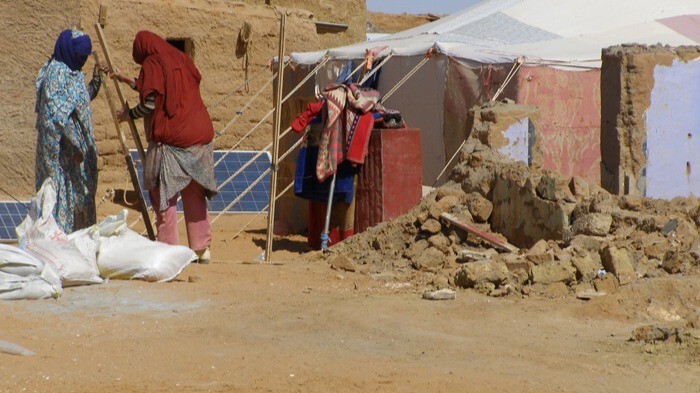
While diplomats celebrate the ‘maturity of the process’, the Sahrawi refugees are still living in Tindouf, caught between hope and oblivion. In the territories under Moroccan control, institutions function, roads are expanding, investors are arriving and the narrative of progress is gaining ground. But without free and verifiable consent, development is no substitute for legitimacy. The Security Council has chosen stability as its supreme value. But stability without justice is merely managed silence.
X. Coda: my fraternal disagreement
I share with Rodríguez Mackay the conviction that the conflict must be brought to a close. I differ only on the method and the moral price. He sees autonomy as the culmination of history; I see it as a stage that will only be legitimate if it springs from the genuine consent of the Sahrawi people. Mackay embodies the diplomatic thinking that looks for solutions within existing power; I defend the law as the only frontier that stops power from becoming destiny. The Security Council can dictate stability. But only justice brings peace.
Conclusion: the necessary blasphemy
Resolution 2797 does not close the conflict: it reconfigures it. The UN has not broken its Charter, but it has desecrated its spirit. And that, in techno-geopolitical terms, amounts to a foundational blasphemy: the implicit acknowledgement that the international order rests not on norms but on calculation.
Perhaps it is a sign of the times: when self-determination becomes synonymous with autonomy under tutelage, the international system shows that it can survive even its own hypocrisy. And meanwhile, in a desert still waiting for its referendum, history goes on – without resolution, but not without memory.
Antonio Tejeda Encinas, Lawyer | Techno-Geopolitical Analyst | President of PCDD-Participación Ciudadana. Democracia. Derechos Digitales and of the Euro-American Committee of Digital Law - CEA Digital Law | CEO of Meta Channel Corporation | Specialist in Digital Law, Algorithmic Ethics, Technology Governance and International Legal Transformation. 🎓 Doctor of Juridical Science (SJD) / Doctor iuris – Central European University, summa cum laude (Budapest, 2014).
Newsletter
Events, news and analysis on digital law, straight to your inbox. Only when we have something worth telling you.