
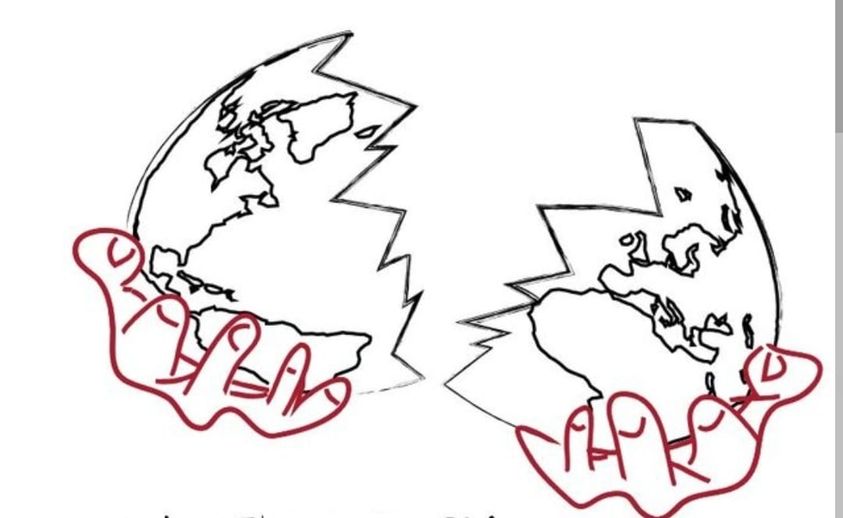
In a world where economic and political systems are interconnected, the phenomenon of debtocracy has emerged as a significant challenge to the protection of human rights and social justice. Debtocracy refers to a situation in which countries are trapped in a spiral of unsustainable debt that undermines their ability to guarantee their citizens’ fundamental rights. This article explores the relationship between debtocracy and human rights, highlighting the challenges it poses and the need to find fair and sustainable solutions.
The impact of debtocracy on human rights:
External debt has become an overwhelming burden for many developing countries, which are forced to devote a large share of their resources to paying interest and principal instead of investing in basic services such as education, healthcare and housing. This creates a vicious circle in which the lack of investment in fundamental rights perpetuates poverty and inequality, resulting in systematic violations of human rights.
Moreover, international creditors such as the International Monetary Fund and the World Bank often attach austerity measures and structural reforms to their policies, with a negative impact on the population’s economic and social rights. These policies typically include public spending cuts, privatisation and deregulation, leading to weaker social protection and greater inequality.
The need for a fair solution:
To tackle the challenge of debtocracy from a human rights perspective, it is essential to seek fair solutions that allow countries to meet their debt obligations without compromising the realisation of their population’s fundamental rights. Possible measures include:
1. Debt audits: carrying out transparent, participatory audits to analyse the legitimacy, legality and sustainability of debt, identifying illegitimate or unjust debts that could be restructured or cancelled.
2. Reform of the international financial system: promoting comprehensive reform of the international financial system to give developing countries greater participation and a stronger voice in decision-making on global economic and financial policy.
3. Rethinking development policies: shifting development policy away from austerity and liberalisation towards strategies that promote investment in human rights, including education, health and social protection.
4. Supporting responsible borrowing capacity: establishing mechanisms that allow countries to obtain financing on fair and sustainable terms, avoiding the imposition of draconian conditions and ensuring that the funds are used to promote human rights.
In conclusion, debtocracy poses a significant challenge to the protection of human rights and social justice worldwide. High levels of external debt and the policies imposed by international creditors undermine countries’ ability to guarantee their population’s fundamental rights, perpetuating poverty and inequality.
It is crucial to address this problem from a human rights perspective and to seek fair solutions that allow countries to meet their debt obligations without compromising their population’s basic rights. This means carrying out transparent, participatory debt audits, reforming the international financial system, rethinking development policies and supporting responsible borrowing capacity.
The international community, including governments, international financial institutions and civil society, must work together to promote a fairer and more equitable approach to external debt and human rights. Only by recognising and protecting the fundamental rights of all people, regardless of their country of origin, can we move towards a more just and equitable society.
Debtocracy not only threatens human rights but also undermines democratic principles and the sovereignty of countries. The financial system needs to be rethought, and an approach based on solidarity, justice and equality must be promoted, with human rights as the foundation of all economic and political decisions.
Ultimately, overcoming debtocracy and protecting human rights go hand in hand. Only through an integrated approach that takes account of economic and social equity, as well as justice and human dignity, can we build a world in which every individual has the opportunity to live a full and dignified life.
Lettre d’information
Événements, actualités et analyses sur le droit numérique, dans votre boîte de réception. Seulement quand il y a quelque chose à dire.