In brief
- On 9 November 2026 Spain's Ministerio de Juventud e Infancia sent the Fiscalía General del Estado a request to assess suspending TikTok in Spain, following an investigation by Maldita.es.
- Minister Sira Rego also asked for an urgent meeting with the platform's representatives in Spain.
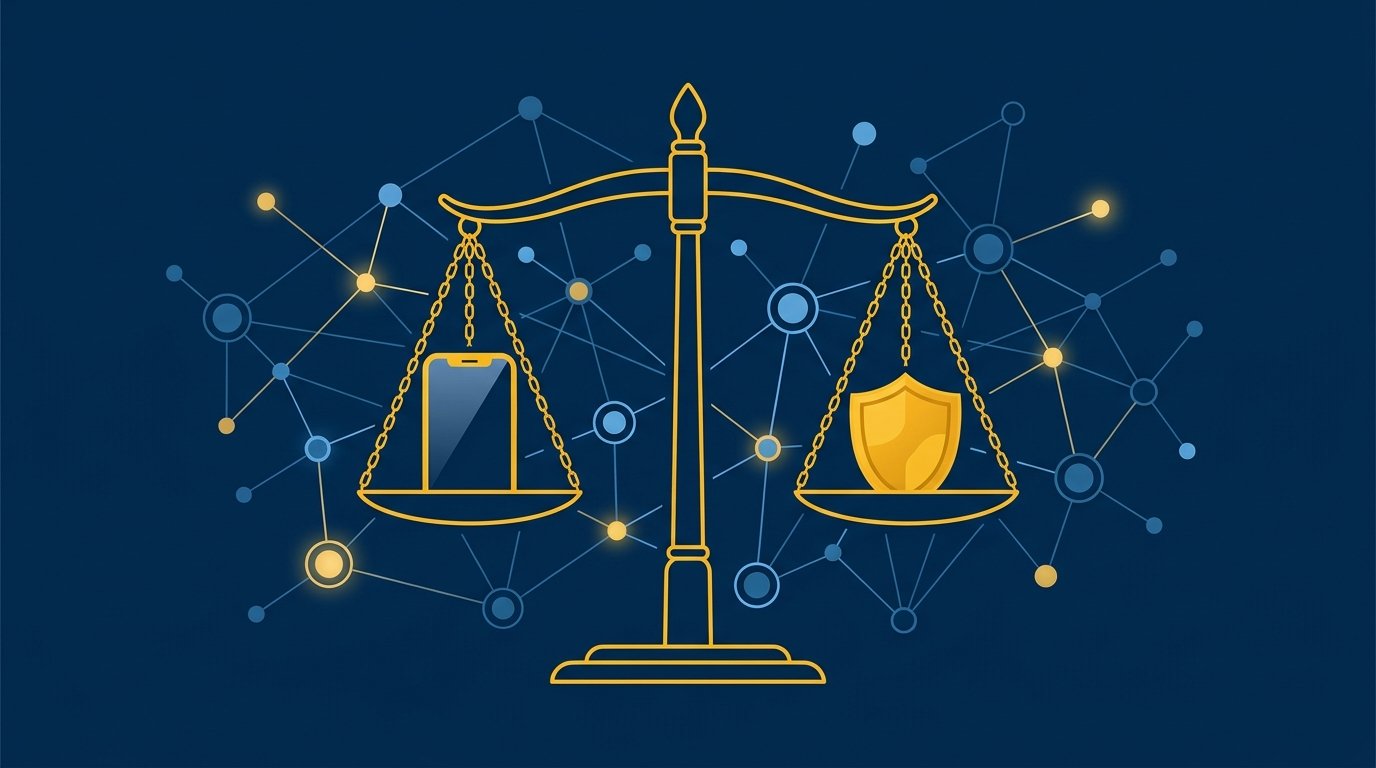
- The criminal-law route sits alongside the EU digital services framework, raising questions of competence and proportionality.
Spain’s Ministerio de Juventud e Infancia has asked the Fiscalía General del Estado (the State Attorney General’s Office) to study suspending TikTok in Spain. It matters because a measure of this scale would affect millions of users and requires child protection to be reconciled with EU law.
What has happened
On 9 November 2026, the department headed by minister Sira Rego sent the prosecutors reporting by Maldita.es on alleged child sexual abuse material on the platform and on the lack of effective mechanisms to stop its spread. Rego also requested an urgent meeting with TikTok’s representatives in Spain.
According to Xataka, the investigation documented 1,183 videos of explicit child sexual abuse with 48 million views, of which TikTok reportedly removed only five. Other outlets speak of thousands of Spanish-language accounts. These are matters still to be tested in court, and the company’s own account should be heard.
The legal framework
What has been requested is an assessment, not a suspension. The prosecutors will decide whether there are signs of criminal conduct and what action to bring. Shutting down a platform service would need a clear legal basis and judicial oversight.
At the same time, TikTok is a very large online platform subject to Regulation (EU) 2022/2065 (the Digital Services Act, DSA), whose supervision of such platforms falls mainly to the European Commission. The DSA itself provides for temporary access restrictions as a last resort and under strict conditions. Hence the question of competence: what can a Member State do through criminal or administrative channels without cutting across a harmonised framework?
Proportionality and open questions
Any restriction would have to pass a necessity and proportionality test. Are there less intrusive tools, such as removal orders, information requests or fines? How are freedom of expression and the interests of unaffected users weighed? Courts and European authorities will have to answer these if the matter proceeds.
Our view at CEA Digital Law
At the Euro-American Committee of Digital Law - CEA Digital Law, we share the view that protecting children is an absolute priority, and that indications of abuse material on a mass platform must be investigated swiftly and rigorously. We suggest three constructive lines.
- Coordination. A fast channel between prosecutors, national digital services authorities and the European Commission would avoid duplication and give legal certainty.
- Graduated measures. Rapid takedown, preservation of evidence and audits of recommendation and search systems should come before any shutdown.
- Working with civil society. The role of fact-checking and alert organisations, as here, can be formalised through reliable reporting channels with enforceable response times.
For Latin America and the Caribbean and for Africa, where several countries are debating platform liability regimes, the episode offers a lesson: define in advance which authority acts, with what safeguards and on what scale of measures, so that urgency does not displace the rule of law.
Sources
- Moncloa.com: El Gobierno pide a la Fiscalía estudiar la paralización de TikTok
- Xataka: El Gobierno lleva a TikTok ante la Fiscalía
- El Plural: Moncloa pone a TikTok en el punto de mira
CEA Digital Law
Lettre d’information
Événements, actualités et analyses sur le droit numérique, dans votre boîte de réception. Seulement quand il y a quelque chose à dire.