
When crisis is a strategy of power: housing, immigration and tourism in Tenerife
by Antonio Tejeda Encinas President PCDD-Participación Ciudadana, Democracia y Derecho , President Euro-American Committee of Digital Law - CEA Digital Law CEO Meta Channel Corporation
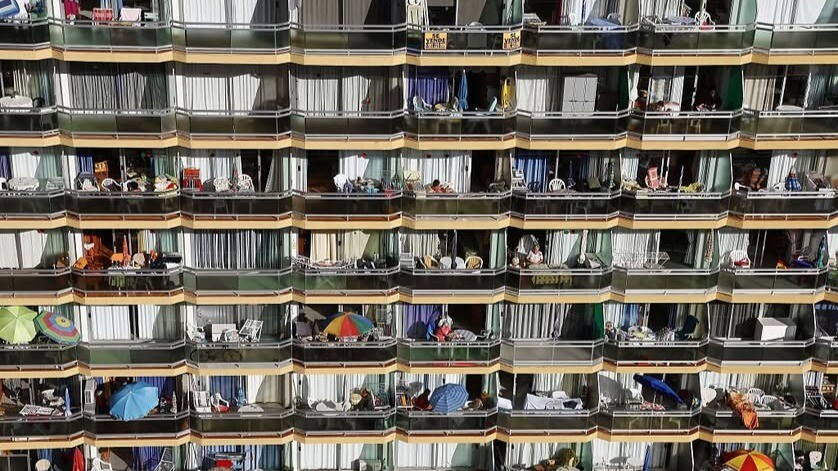
The housing crisis in Tenerife is neither an unexpected phenomenon nor a natural consequence of the way the market has evolved. It is the result of political management that has prioritised property speculation, uncontrolled tourism and the accumulation of assets in private hands. What many identify as a crisis is, in reality, a model for administering the territory based on business profit and not on the quality of life of the population.
In his analysis of media manipulation, Noam Chomsky broke down a key strategy: problem-reaction-solution. First a problem is fostered, then public outrage is steered towards secondary causes and, finally, a solution is offered that does not alter the status quo. In the Canary Islands, this mechanism is evident: tourism drives up the cost of living, wages do not keep pace and housing becomes an unaffordable luxury. Yet, instead of tackling the structural causes, political discourse focuses on peripheral problems, ensuring that the social response stays within the desired bounds.
The script of the problem: empty homes and speculation
The official narrative suggests that the housing crisis is due to an ‘imbalance between supply and demand’. In other words, there are more people wanting housing than there are homes available. But reality contradicts this premise:
Only 63.7% of Canarian households own their home, the lowest rate in Spain.
In Santa Cruz de Tenerife, renting a room in the city centre costs more than €1,300 a month, 29.4% more than in 2020.
In Tenerife, 70% of tourist licences are concentrated in five municipalities in the south, where residential rents have risen by more than 60% in the last five years.
The problem is not a lack of land, nor overpopulation, nor even growth in demand. The problem is that housing has become a financial asset, managed according to profitability and not to social need. This is a market designed to favour the accumulation of property, making access easier for investors while making life more expensive for the local population.
But this is where the second act of the script comes in: diverting attention.
Immigration as a smokescreen
Every time social unrest grows, the debate is redirected towards immigration. The mechanism is simple: link the lack of housing or the deterioration of public services to the arrival of migrants, even though the data refute that link.
In 2024, 46,000 migrants arrived in the Canary Islands, but in 2025 arrivals have fallen by 43.3%. Even so, the narrative of the ‘migrant avalanche’ remains at the forefront of political debate.
Foreigners make up 15% of the Canarian population, but they are not evenly distributed: in sectors such as agriculture, 80% of workers are migrants because of low wages and precarious working conditions.
The Canary Islands need 20,000 foreign workers for precarious jobs, while maintaining an unemployment figure of 160,000 people.
In this context, demonstrations have emerged by groups questioning the arrival of more immigrants while the local population cannot access housing. The slogan is clear: ‘How can we keep taking in migrants if there are no homes and no jobs?’. The outrage is legitimate, but it is aimed at the wrong target.
Social unrest does not stem from immigration but from an economic model that has made housing more expensive, made employment precarious and handed the management of the territory over to private interests. Yet, instead of pointing at those truly responsible – the property sector, tourism policies and the lack of state regulation – frustration is channelled towards migrants. It is the perfect reflection of the problem-reaction-solution described by Chomsky: generate unrest, direct anger towards an external enemy and offer cosmetic solutions that do not alter the heart of the problem.
Tourism and the resource crisis: the hidden equation
While housing becomes more expensive and the labour market deteriorates, another key factor in this equation goes unnoticed: the overexploitation of resources to serve mass tourism.
In the south of Tenerife, 70% of the water goes to hotels and golf courses, while the aquifers are at critical levels.
Despite the water crisis, Tenerife will receive 2.9 million tourists in 2025, 9.4% more than in 2024. This growth reflects a paradox: as resources are depleted, the model that preys on them is intensified.
According to the University of La Laguna (2025), 80% of tourism profits flow out to foreign parent companies, mainly hotel chains and investment funds.
The official narrative insists that tourism ‘sustains the Canarian economy’, but omits the fact that the profits are concentrated in the hands of a few while the costs are socialised. The resource crisis is not a consequence of demographic growth but of an unequal distribution of resources driven by private interests.
Finally: crisis as a management model
Talking about a crisis implies assuming that there is a problem that needs to be solved. But in this case, the supposed crisis is not a failure of the system but its normal functioning. Property speculation, labour exploitation and the depletion of resources are not side effects of a failed model, but the very basis on which it operates.
The crux of the problem lies not in immigration, nor in the lack of land, nor in overpopulation. It lies in an economic and political structure that turns housing into a speculative asset, externalises the profits of tourism and keeps job insecurity as the norm.
The debate will continue to revolve around superficial solutions – building more homes, attracting investment, regulating rents – without addressing the real problem: who controls the territory, and to what end.
While countries such as Austria protect access to housing with 60% public supply, the Canary Islands remain anchored to a model in which 70% of tourist licences benefit five municipalities.
The question is not how long this model can be sustained, but how much longer Canarian society will accept this game without questioning its rules.
Lettre d’information
Événements, actualités et analyses sur le droit numérique, dans votre boîte de réception. Seulement quand il y a quelque chose à dire.